- Home
- News
- Side Beam X-ray Inspection System : Improving Quality Control for Glass Jarred Food Production
Side Beam X-ray Inspection System : Improving Quality Control for Glass Jarred Food Production
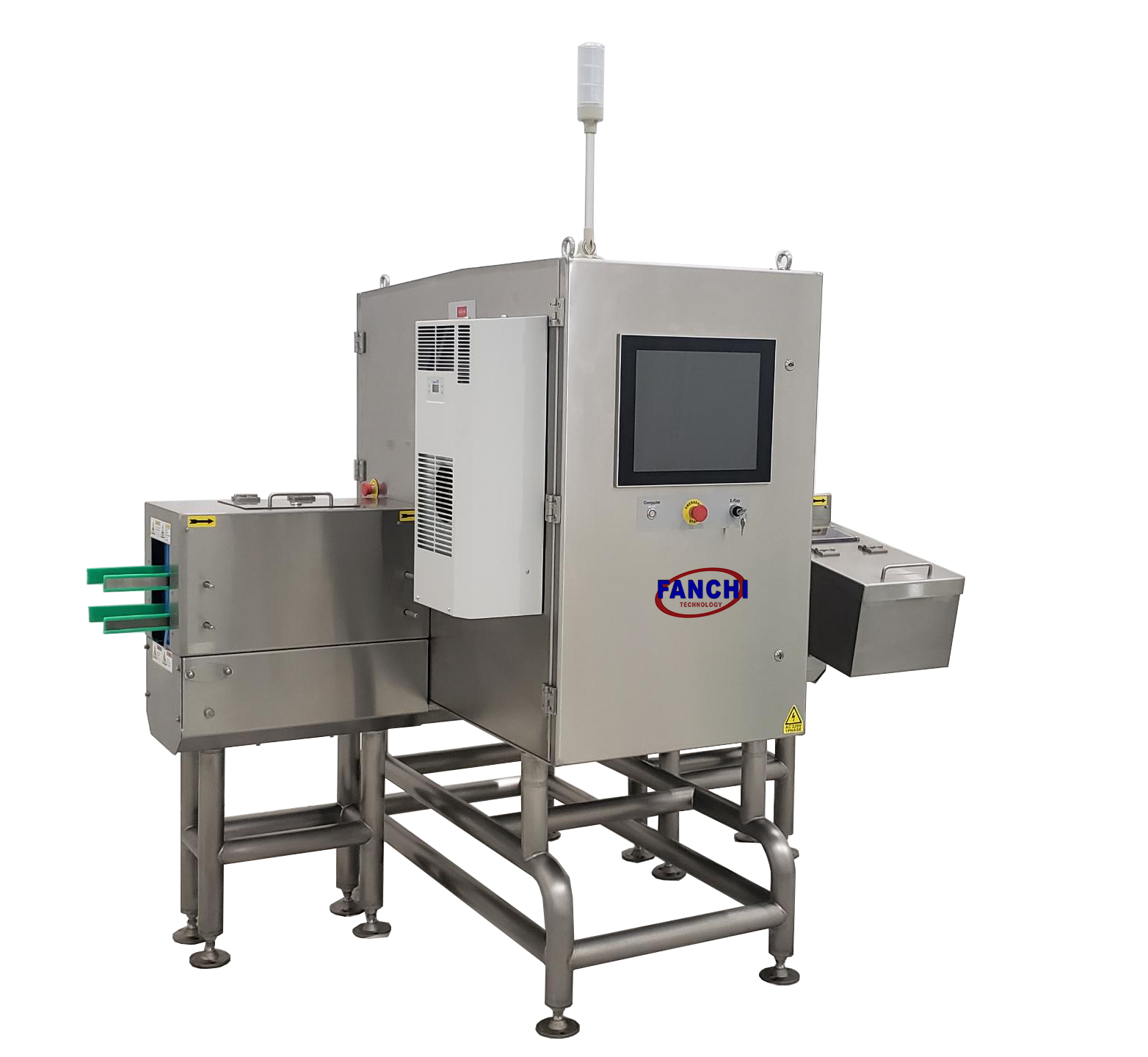
Side Beam X-ray Inspection System Application Case Study: Improving Quality Control for Glass Jarred Food Production
1. Industry Background
The global glass-packaged food and condiment market has sustained steady growth over the past decade, driven by rising consumer demand for shelf-stable, premium-quality products including pasta sauces, pickles, jams, and prepared meals. Glass packaging is favored for its inert, non-toxic properties and ability to preserve product flavor, but it also introduces unique quality control challenges that directly impact food safety compliance.
Regulatory bodies including the FDA in the United States and EFSA in the European Union have established strict standards for foreign body contamination in food products. Food manufacturing facilities seeking access to global markets must comply with third-party audit standards such as HACCP (Hazard Analysis and Critical Control Points), BRCGS (British Retail Consortium Global Standards), and IFS (International Featured Standards). These frameworks mandate systematic foreign body detection at critical control points in the production process.
Among all contamination risks, glass fragments originating from damaged jars, chipped bottle mouths during filling, or broken glass in raw materials represent one of the most hazardous and difficult-to-detect defects. Traditional inspection technologies struggle to identify glass particles within glass containers, leaving manufacturers exposed to product recall risks, customer complaints, brand reputation damage, and regulatory penalties. For mid-sized and large sauce and condiment producers, reliable in-line inspection of glass-packaged products is no longer an optional upgrade—it is a core requirement for market access and operational resilience.
2. Customer Production Challenges
For this case study, we examine a mid-sized European condiment manufacturer specializing in glass-jarred pasta sauces, salsa, and pickled vegetables. The company operates three filling lines with production speeds ranging from 40 to 70 meters per minute, packaging products in 200ml to 750ml round glass jars with metal lids.
Before implementing Fanchi-tech’s solution, the manufacturer faced three persistent quality control challenges:
- Limited contaminant detection scope: The production line was previously equipped with conventional conveyor metal detectors, which could only identify ferrous and non-ferrous metal contaminants. They could not detect glass fragments, ceramic shards, stone particles, or dense plastic pieces that occasionally entered the product stream from raw ingredients or jar handling processes.
- Blind spots in legacy X-ray solutions: The company had tested a top-view X-ray inspection system from another vendor, but it failed to reliably detect small glass fragments along the vertical side walls and curved bottom of glass jars. The dense glass container material attenuated the vertical X-ray beam, creating detection blind spots that resulted in multiple escaped defective products.
- Compliance and recall risk: As the company expanded its export business to UK and Scandinavian retail chains, it needed to meet stricter BRCGS Level 2 requirements. The existing inspection setup could not provide 100% product inspection and verifiable data records, putting critical client contracts at risk.
The manufacturer estimated that undetected contamination incidents cost them approximately €120,000 annually in product returns, customer chargebacks, and rework costs, in addition to intangible brand damage. They required an in-line inspection solution that could reliably detect glass fragments inside glass containers, handle their full range of jar sizes, and integrate seamlessly with their existing filling lines.
3. Why Traditional Inspection Methods Were Not Enough
Many food manufacturers initially attempt to address glass jar contamination with manual inspection, standard metal detection, or top-down X-ray systems, but all three approaches have fundamental limitations for glass-packaged products.
Manual visual inspection relies on line workers to spot defective jars as they pass by on the conveyor. Even for slow production lines, human inspectors can only reliably identify large, visible defects. Small glass fragments below 2mm are nearly impossible to spot visually, especially when embedded in dark-colored sauces or located near jar walls. Fatigue, distraction, and high line speeds further reduce detection rates, with typical manual inspection effectiveness falling below 60% for small foreign bodies.
Conventional metal detectors are effective for metal contamination but cannot detect non-metallic hazards such as glass, ceramic, stone, or dense plastic. For glass jar production lines, where glass fragments are the highest-risk contaminant, metal detectors alone leave a critical gap in food safety protection.
Top-view (vertical beam) X-ray systems work well for flat, packaged products but perform poorly for tall, rigid glass containers. The vertical X-ray beam must penetrate the thick glass base of the jar before reaching the product, reducing effective sensitivity. Contaminants located along the vertical side walls of the jar are particularly hard to distinguish from the glass container itself, resulting in high false reject rates or missed contaminants.
Finally, batch sampling and laboratory testing only inspect a tiny fraction of total production. A single contaminated jar that escapes sampling can trigger a full product recall, which costs an average of hundreds of thousands of euros in logistics, disposal, and brand recovery expenses for food manufacturers.
4. Fanchi-tech Solution
To address these challenges, the manufacturer deployed a Fanchi-tech Side Beam X-ray Inspection System on each of its three filling lines, installed immediately after the jar capping station and before labeling.
Unlike traditional top-view X-ray machines, Fanchi-tech’s side beam system projects a horizontal X-ray beam across the product tunnel, scanning jars from the side as they pass through the inspection chamber. This side-view geometry eliminates the blind spots caused by thick jar bases and walls, making it possible to detect even small glass fragments inside glass containers with high accuracy.
Core Detection Capabilities
The system uses a high-performance X-ray generator paired with a high-definition X-ray detector with 0.4mm resolution, paired with Fanchi-tech’s latest AI-based image processing algorithm. It reliably identifies a wide range of high-density foreign bodies inside glass and plastic containers:
- Stainless steel particles as small as 0.3mm (spherical) or 0.3x2mm (wire form)
- Glass fragments and glass balls down to 1.0mm
- Ceramic and stone particles down to 1.0mm
- Dense plastic and rubber contaminants
Automatic Rejection System
When a contaminated jar is detected, the system triggers an automatic transversal pusher rejector paired with audible and visual alarm signals. The pusher mechanism is specifically calibrated for rigid glass jar products, removing defective items from the production line without damaging adjacent good products or causing line jams. A lockable reject bin ensures that rejected products cannot accidentally re-enter the production stream.
Operational Features
The system includes a 17-inch industrial touchscreen interface with an intuitive menu structure. It stores up to 200 pre-configured product recipes, allowing operators to switch between different jar sizes and product types in seconds with automatic calibration. All inspection data is automatically saved with date and time stamps, supporting full traceability for quality audits and regulatory compliance. Built-in remote maintenance capability allows Fanchi-tech engineers to diagnose software issues and optimize parameters online, minimizing downtime.
5. Machine Configuration Matching This Application
The Fanchi-tech side beam X-ray system was selected and configured specifically to match the manufacturer’s production parameters:
- Tunnel dimensions: 160mm (width) x 280mm (height) product tunnel accommodates the full range of the customer’s glass jar sizes, from 200ml to 750ml round and rectangular jars, with clearance for cap hardware.
- Conveyor speed range: 10–90m/min adjustable conveyor speed matches the customer’s 40–70m/min filling line output, with room for future production speed increases.
- Line height compatibility: Adjustable line height options (700–950mm, customizable within +/-50mm) allowed the system to be matched exactly to the existing conveyor height of each filling line, eliminating the need for costly line modifications.
- Conveyor belt: FDA-approved modular chain belt meets strict food contact safety requirements and is designed for easy cleaning and sanitation, supporting the customer’s daily washdown procedures.
- Maximum product weight: 25kg load capacity easily handles individual glass jars and multi-pack formats.
- Construction: Full 304 brushed stainless steel machine body with hygienic design supports thorough cleaning and is suitable for wet food production environments. An optional IP66-rated version is available for facilities with high-pressure washdown requirements.
- Radiation safety: Lead-free protective curtains, magnetic safety switches on all cabinet doors and tunnel hatches, emergency stop buttons, and key-operated X-ray shutoff ensure full compliance with global radiation safety standards.
All core components are sourced from globally recognized suppliers, including a US VJT X-ray generator, Finnish DT X-ray detector, Danish Danfoss frequency converter, German Pfannenberg industrial air conditioning unit, French Schneider electrical components, and US Interoll electric roller conveyor system. This component strategy ensures long-term reliability, global spare parts availability, and consistent performance in 24-hour continuous production environments.
6. Application Process
The side beam X-ray inspection system is integrated as a critical control point (CCP) in the glass jar sauce production workflow, positioned after capping and before labeling and secondary packaging:
- Raw Material Preparation: Raw ingredients including tomatoes, vinegar, spices, and glass jars are received and inspected upon delivery.
- Sauce Cooking & Mixing: Ingredients are blended, cooked, and prepared for filling according to standardized recipes.
- Glass Jar Filling & Capping: Empty jars are washed, filled with product, and sealed with metal lids on the automated filling line.
- Side Beam X-ray Inspection: Sealed jars enter the X-ray inspection tunnel single-file. The horizontal X-ray beam scans each jar completely, and the AI algorithm analyzes the image in real time for foreign body contaminants.
- Automatic Reject: Any jar identified as containing contaminants is automatically removed from the line by the pusher rejector into a locked reject bin. The system logs the rejection event with timestamp and product information.
- Labeling & Secondary Packaging: Accepted jars proceed to labeling, date coding, and case packing.
- Finished Goods Warehousing: Palletized finished goods are transferred to the warehouse for distribution.
This inline 100% inspection workflow ensures that every single jar leaving the production facility has been scanned for contaminants, with no gaps in coverage.
7. Customer Benefits
Twelve months after full deployment, the manufacturer reported measurable improvements across quality, compliance, and operational performance:
- Dramatically reduced contamination risk: The system achieved a 99.8% detection rate for 1.0mm glass fragments in glass jars, eliminating escaped glass contamination incidents entirely over the 12-month period. The company recorded zero customer complaints related to foreign body contamination in exported products.
- Eliminated recall exposure: By implementing 100% inline inspection with auditable data records, the manufacturer successfully passed BRCGS Level 2 certification and secured three new retail client contracts in Northern Europe.
- Improved production efficiency: The automated inspection system operates continuously at full line speed with no need for manual inspection stations. The manufacturer reallocated 6 full-time inspection staff to higher-value production tasks, reducing labor costs by approximately €85,000 annually.
- Reduced false reject rates: The AI-powered detection algorithm reduced false rejection rates to less than 0.1%, compared to 1.2% with the previous top-view X-ray prototype. This translated to approximately €40,000 per year in reduced product waste.
- Full quality traceability: Automatic data logging with time and date stamps provides complete inspection records for every production batch, simplifying internal quality audits and regulatory inspections.
- Low total cost of ownership: The system’s low power consumption, intelligent cooling system that extends X-ray tube life, sealed oil-filled X-ray generator, and maintenance-free rollers result in minimal ongoing operating and maintenance expenses.
8. Why Choose Fanchi-tech
Shanghai Fanchi-tech Machinery Co., Ltd. is a specialized manufacturer of food inspection and quality control equipment, with over 16 years of industry experience and products exported to more than 50 countries worldwide.
- Application-specific design: Unlike generic X-ray systems, Fanchi-tech’s side beam X-ray line is purpose-engineered for glass and plastic bottle/jar inspection, with optimized beam geometry and detection algorithms specifically for glass-in-glass detection.
- Premium global components: All core systems use industry-leading components from North American and European suppliers, ensuring long-term reliability and consistent detection performance in demanding continuous production environments.
- AI-powered detection technology: The latest generation AI software algorithm improves detection sensitivity, reduces false rejects, and simplifies operation, with auto-calibration and pre-set product recipes that minimize operator training requirements.
- Customizable solutions: Tunnel dimensions, line height, reject mechanisms, and software features can all be tailored to match specific product requirements and existing production line configurations.
- Global compliance: All systems carry CE, FDA, ISO9001, and ISO14001 certifications and comply with EN 61010-02-091 and FDA CFR 21 Part 1020.40 radiation safety standards, making them suitable for installation in most global markets.
- Responsive technical support: Built-in remote maintenance capability allows Fanchi-tech engineers to provide fast online support, and the company offers comprehensive 1-year warranty coverage with extended warranty options available.
9. FAQ
Q1: Can a side beam X-ray machine detect glass fragments inside glass jars?
Yes, side beam (horizontal view) X-ray systems are specifically designed to solve this challenge. By projecting the X-ray beam horizontally rather than vertically, they avoid the signal attenuation caused by thick jar bases and can reliably distinguish glass contaminants from the glass container wall, detecting glass fragments as small as 1.0mm.
Q2: What types of contaminants can this X-ray inspection system identify?
The system detects all high-density foreign bodies including stainless steel, ferrous metals, non-ferrous metals, glass, ceramic, stone, and dense plastic/rubber particles. It cannot detect low-density materials such as paper, hair, or most soft plastics.
Q3: Is this system suitable for both glass and plastic bottled products?
Yes, the side beam X-ray system works with glass, plastic, and metal containers including bottles, jars, cans, and cartons. It supports a wide range of product types including sauces, beverages, dairy products, and personal care items.
Q4: What is the detection sensitivity for glass particles in glass containers?
Under standard test conditions, the system can detect glass balls as small as 1.0mm in diameter. Actual sensitivity may vary slightly depending on product density, container wall thickness, and contaminant location within the container.
Q5: How does the automatic reject system work for glass jar products?
When a contaminant is detected, the system triggers a transversal pusher mechanism that gently but firmly pushes the defective jar off the conveyor into a lockable reject bin. The timing is calibrated to avoid damaging adjacent good products and works reliably at full production speed.
Q6: Does this X-ray inspection system support HACCP and BRC compliance?
Yes, the system supports full compliance with HACCP, BRCGS, IFS, and other global food safety standards. It provides 100% inline inspection, automatic data logging with timestamps, and auditable inspection records required for third-party audits.
Q7: Can the machine be integrated into existing glass jar filling lines?
Yes, the system is designed for inline integration. It offers adjustable line heights from 700mm to 950mm (customizable) and can be installed between existing conveyor sections with minimal line modification.
Q8: What is the maximum conveyor speed of this side beam X-ray system?
The system supports conveyor speeds from 10m/min up to 90m/min, making it suitable for both low-speed specialty product lines and high-volume commercial filling operations.
Q9: How is radiation safety ensured for production line workers?
The system features multiple layers of radiation protection including lead-free X-ray shielding curtains, magnetic safety switches that shut off the X-ray beam if any door or hatch is opened, emergency stop buttons, and key-operated power control. All systems comply with global radiation safety standards and leak radiation levels are well below legal limits.
Q10: Can inspection data be exported for quality management systems?
Yes, the system includes Ethernet and USB connectivity. Inspection data, reject logs, and production statistics can be transferred to external quality management systems or stored on USB memory devices for long-term record keeping and traceability.
Contact Us for Your Inspection Solution
If you are looking for a reliable side beam X-ray inspection solution for your glass jar or bottled product line, Fanchi-tech’s engineering team can provide a customized configuration matched to your production requirements.
Shanghai Fanchi-tech Machinery Co., Ltd
Contact: Kerry
Email: kerry@fanchitech.net
Mobile/WhatsApp: +86 13917555254
Website: www.fanchitechnology.com